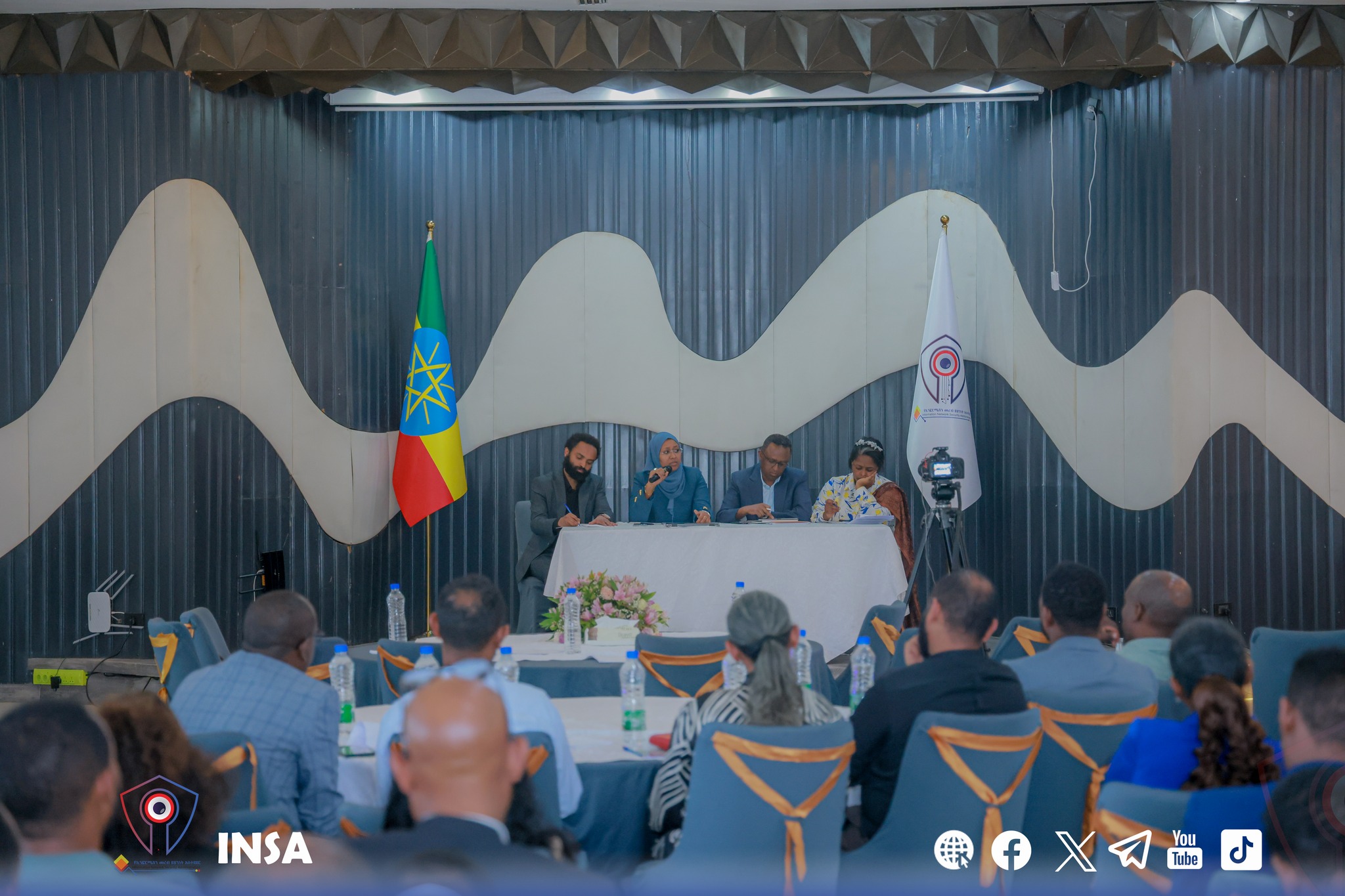
Information Network Security Administration (INSA) conducted a review of its mid-year performance for the 2018E.C fiscal year in the presence of Director General Ms. Tigist Hamid, Deputy Director Generals, and officials at various levels of leadership.
During the session, Ms. Tigist stated that the Administration has been continuously upgrading its defense capabilities and platforms in response to the evolving nature of cyber threats. She noted that particular attention has been given to strengthening technological infrastructures that enable early detection of and response to cybersecurity risks.
Over the past six months, the Administration has undertaken foundational activities supporting the “Digital Ethiopia 2030” strategy. It has also developed key technological solutions that enhance the capacity of government institutions to digitize their operations and deliver more efficient services.
Among these initiatives are the development of an e-Invoice system for the Ministry of Revenues, body cameras for the Addis Ababa Revenues Bureau, and integrated human resource and document management systems for the Federal Police and various ministries.
In addition, cloud services have been provided to multiple institutions, including the Ethiopian Construction Authority, the Education and Training Authority, Ethiopian Forestry Development, Defense Construction, Ethiopian Postal Service, Ethio Engineering Group, and the Heritage Authority.
The Administration also launched “spin-off” initiatives in collaboration with private sector entities to ensure technology ownership and promote indigenous solutions. This approach enables innovations developed by INSA to transition into the private sector and enter the market, strengthening public–private partnerships and opening a new chapter for the growth of the digital economy.
Over the past six months, a total of 27,773 cyberattacks were recorded against Ethiopia’s digital infrastructures. Of these, 99.03% (27,505 attacks) were successfully thwarted. In digital forensic investigations, the Administration responded to 245 out of 253 requests (96.8%).
From a technology control perspective, 196 imported technology products that posed potential national security risks were prevented from entering the country.
In the area of policy and legal frameworks, key developments included drafting amendments to the Administration’s re-establishment regulation, preparing directives under the Electronic Signature Proclamation, and developing the National Digital ID Policy document.
Additionally, a National Cybersecurity Awareness Framework was prepared and implemented, and cybersecurity solutions and technical support were provided to 14 institutions. Various public awareness initiatives were also carried out to enhance community understanding of cybersecurity issues.
Beyond fulfilling its core mandate of safeguarding the country’s information and information infrastructure security and ensuring cyber sovereignty, INSA has also undertaken notable corporate social responsibility activities.
It was emphasized that the institution’s upcoming initiatives will play a critical role in the success of “Digital Ethiopia 2030,” and that all leaders and staff members are expected to fulfill their indispensable responsibilities. The mid-year performance review concluded with comprehensive responses and clarifications provided by the Director General and Deputy Director Generals to questions raised by participants.